Living Room
Ceilings on the Brain
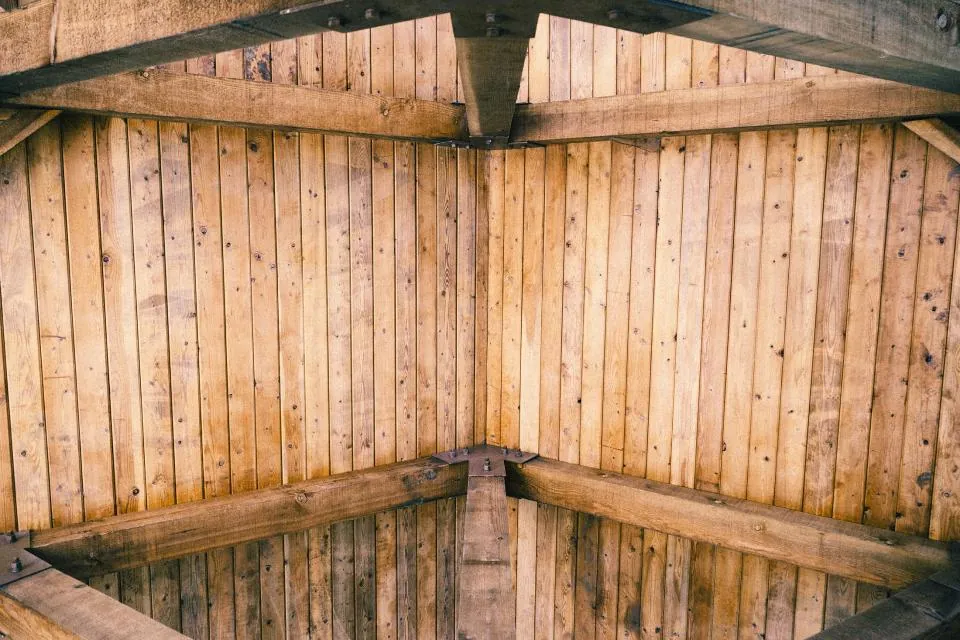
Our living room ceiling has a texture that can only be described as "cottage cheese that gave up." We can't stop staring at it. And we can't stop staring at pictures of tongue and groove ceilings.
Why tongue and groove?
Split-levels have big, vaulted-ish living rooms on the upper level. That ceiling is the largest surface in the room, and right now it's the ugliest. Tongue and groove planks would cover the popcorn texture (after testing it for asbestos, which you must do on pre-1980 ceilings), add architectural detail, and make the room feel like a cabin in the best way.

Natural wood or a white tongue and groove ceiling?
- Natural pine is cozy and forgiving, but in a room with 8-foot side walls it can feel heavy.
- A white tongue and groove ceiling keeps the texture and shadow lines while bouncing light around. This is where we're leaning.
- Whitewash is the in-between: wood grain shows through a thin white stain.
Picking a ceiling white
We painted sample boards with two Behr colors:
- Behr Ceiling White: crisp, flat and bright. It reads a little blue in our north light.
- Behr Dolphin Fin: a soft off-white gray. On the walls it's lovely, and on a plank ceiling it gives just enough contrast with white trim.

Decision pending. Probably Dolphin Fin. Ask us again after we've stared at the ceiling for another month.