Crafty: Framing Great Grandma's Recipe
Somewhere in a recipe box that smells like cinnamon and 1962, my great grandma's handwriting is still telling people to "add flour until it feels right." This weekend that card finally got the respect it deserves: a frame, a mat, and a spot on our kitchen wall.
When you buy a split-level that's been beige since the Carter administration, the walls feel like a blank check. I didn't want generic "Live Laugh Love" art in the kitchen. I wanted something that actually belonged to us, and nothing belongs to us more than Great Grandma's sour cream coffee cake.
Why a great grandma frame beats store-bought art
Handwriting is the most personal thing you can hang. The loops, the crossed-out measurements, the grease spot over "bake 45 min" all tell a story. A framed recipe card is cheap, takes about an hour, and starts a conversation every time someone grabs a glass of water.
What you need
- The original card (or a high-resolution scan if the original is too fragile)
- A frame at least two sizes larger than the card, we used an 8x10
- An acid-free mat cut to the card's size, plus acid-free photo corners
- A soft brush and a clean, dry work surface
How we framed it
- Scan first, always. Before anything touches tape, scan the card at 600 dpi. If the worst happens, you can print a copy on cardstock.
- Clean gently. A dry, soft brush removes crumbs (yes, actual crumbs). Don't use water or erasers on old ink.
- Use photo corners, not glue. The corners hold the card to the backing without damaging it, so the recipe can come out of the frame the next time someone actually wants to bake it.
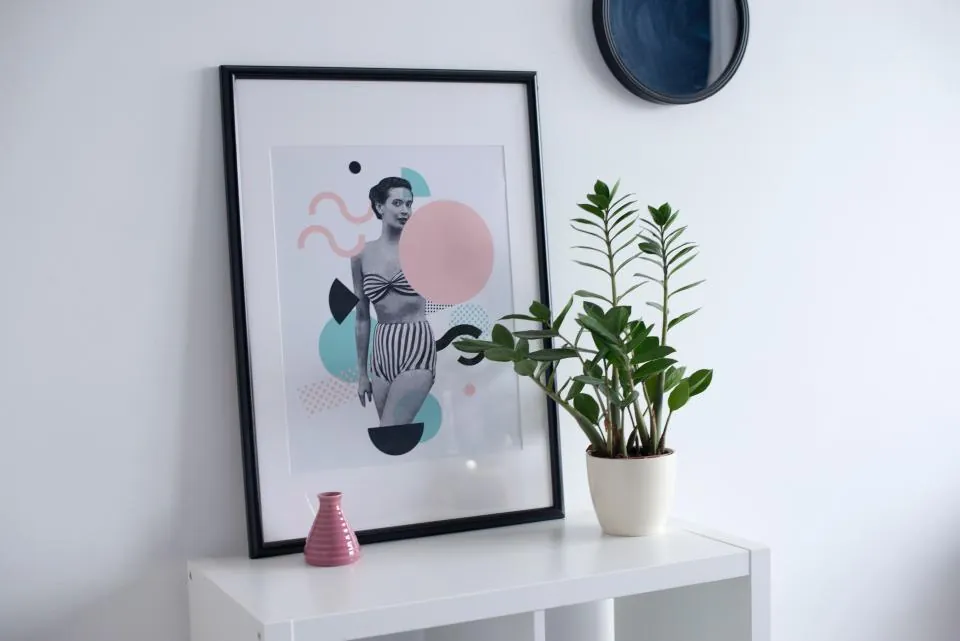
- Float it on a big mat. A small card in a wide mat looks like a museum piece. Tight framing looks like a fridge magnet.
- Hang it away from the stove. Steam and direct sun fade ink fast. Ours lives on the wall opposite the window.
Total cost: about $22 and an afternoon. Total number of times I've teared up looking at it: we're not counting. The split-level kitchen is still ugly, but now it's ugly with family history. That's progress.